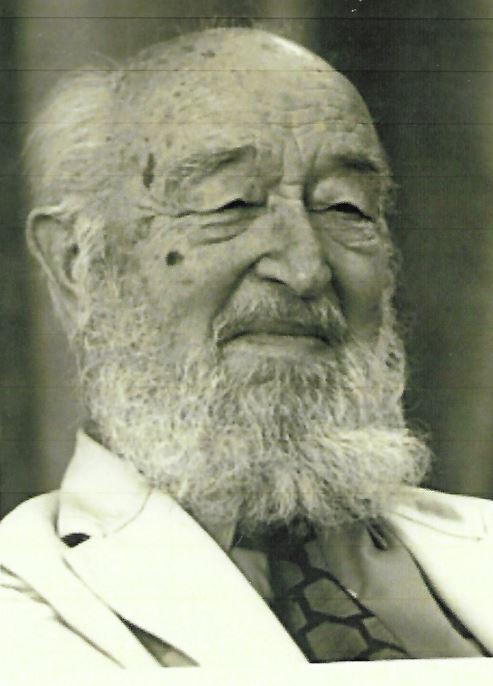
Marinus Sorensen was my grandfather. Born in Denmark… Canadian citizen… and Anglophile… his life spanned WW1 and WW2. It contains a number of stories worth remembering about the world in those days, many of which spring from the rise of Nazi Germany and the war that engulfed Europe.1
Marinus was born into a poor family, with a blind father. Following his schooling he trained as a dairyman. Unable to find work in Denmark, Marinus set out for the United States in 1911. A chance encounter, an exchange of tickets, and he ended up in Canada, not speaking a word of English.
He may not have spoken English then, but in his lifetime he became fluent in English and wrote vociferously and in beautiful prose.
He qualified for the Canadian government’s land grant incentive to go west and he ended up in Lloydminster, Saskatchewan. When the Great War was declared, he signed up to serve with the Royal Canadian Regiment. Later he would always tell the family that it was probably his two horses that attracted the army, and not him.
Marinus Sorensen WWI sign-up papers, medals and memorabilia
He travelled to Bermuda for training and then to Europe where the Regiment was involved in the battles of Ypres, the Somme and others. Demobilized as a sergeant, in England he met Miriam Stephens, a nurse. They married and at the end of hostilities. They settled in Rocky Mountain House Alberta where Marinus, in partnership with a brother-in-law, started a creamery/cheese factory. Their timing was unfortunate because the economy headed into a recession and the price of milk exceeded the price of the cheese they had for sale.
Marinus, Miriam and their infant son Eric were never too far from starvation during the winters in this period. At the time the Canadian Pacific Railway (CPR) was expanding its efforts to settle western Canada. Having received huge grants of land as part of the agreement to build the railway west, the CPR had an incentive to attract homesteaders to Canada’s “West”. Their interest was straightforward: every homesteader who settled in the West could:
Buy CPR land.
Use the CPR to travel west.
Ship grain and livestock on CPR lines.
Purchase goods that arrived by CPR rail.
The CPR became one of the largest private immigration-promoting organizations in the British Empire.
Marinus saw an opportunity and he wrote to the directors of the CPR in Montreal suggesting that they should open an immigration agent office in Copenhagen. He was provided with a railway ticket to Montreal to meet the officials and borrowed a suit or the money for one to present himself. He was hired and became the Scandinavian representative for CPR in Copenhagen. Subsequently he created branch offices in Oslo and Stockholm.
While he had staff to man the offices, much of his own time was spent travelling the Baltic countries, Estonia, Latvia and Lithuania to interview potential immigrants to Canada and to present the applications of such immigrants to the Canadian Immigration Department in Ottawa. In the course of this work, Mark met many Jewish families who had left Germany and he assisted them in their applications for immigrant status to Canada. Often these refugees were accommodated in the Sorensen home. His personal papers contain meticulous accounts of the interviews he had with families interested, or that he was trying to interest, in immigration to Canada. He became most concerned that many of his applications were being refused, because the suggested immigrants were Jewish. His papers also reveal his long, determined and increasingly bitter communications with his management to get these anti-Jewish decisions overturned.
Some of his recommendations were, in fact, accepted. Although I have lost track now, some of the families of immigrants of this time have been in touch with the Sorensen family here to express their thanks and appreciation for his efforts to get their relatives out of Europe.
He saved copies of just about everything he wrote, from personal letters to official documents. Some of this material became source material for the important history of Canada’s attitude to Jewish immigration, “None is to Many: Canada and the Jews of Europe”, Irving Abella and Harold Troper. An extract from one of his letters, quoted by Abella and Troper has always stayed with me. Writing back to his superiors, he called the Canadian Government’s Immigration Branch “the most soulless Canadian institution,” warning that “one day those responsible for this inhumane policy will be brought to the bar of justice.”
When his Copenhagen office had to close in 1940, he wrote of his frustrations in a letter to a railway official…
“If we had experts and men with a rudimentary appreciation of Political Economy in the Department of Immigration they would have corrected public opinion in Canada instead of resorting to the mob for endorsement of their negative and self-sufficient attitude.“
He believed that one day the attitude of government officials, particularly those in the Immigration Branch, would be seen as a
… “shameful chapter in the history of Canada in this period…it will record regrettable opportunities lost for the expansion of the country and for the exercise of the nobler and gentler qualities of the nation”. He went on to write… “The day will come when Immigration Policy will be under debate, and then the Ottawa Immigration Service shall be judged by their records. For us it will not be unimportant to have these records at our fingertips. They shall then find us as their bad conscience.”
Source: Marinus Sorensen as quoted in None is Too Many, Abella and Troper
Long before the outbreak of the Second World War Marinus sensed the threat of German aggression and at the end of August 1939 he organized a hurried departure from Denmark to Canadas with his wife and six children. Four days later on September 3rd, 1939 Europe was at war. He settled his family in Canada and returned immediately to continue with his job in Copenhagen. In April 1940 he was in Stockholm, having completed one of his tours in the Baltic countries interviewing potential immigrants. He tried to fly to Copenhagen but was unable to because the aircraft had not returned from Copenhagen. He took a train to Malmo on west coast of Sweden and tried to go to Copenhagen by ferryboat. This also proved impossible because the ferry had not returned from Copenhagen. He returned to an hotel in Stockholm and read in the morning papers that Nazi forces had invaded Denmark.
He spent several weeks in Sweden looking for a possible escape to England. Finally through friends in the Finnish shipping industry he managed to arrive in Finland and again through friends was able to obtain passage on a Finnish troop train enroute to fight the Russians in the north during the Russo-Finnish war. The railway did not quite reach the Finnish Arctic port of Petsamo (Now renamed and part of Russian territory) and the final lap of his trek was by Lapp reindeer sleigh to an early convoy from Petsamo to Newcastle, England. His family knew nothing of his whereabouts for several months. (His account of this trip makes for great reading.)
After a month’s holiday he was sent to work in the London office of CPR and remained there throughout the war except for trips to visit his family in Canada. In London the CPR office was next to Canada House on Trafalgar Square. The male office staff were required to spend the nights on the roof of the building as air raid wardens, with pails of sand to smother an incendiary bombs dropped by the Luftwaffe. His watch included the protection of Canada House next door in like manner.
He was an “anglophile” to the core. A voracious writer, many of his letter etc. speak to his love of Britain. One of the best pieces was one he wrote describing what it was like to look out on Trafalgar Square from his office during the war. I think it gives a real flavour of what it was like during the war…
From my window where I worked I looked out over Trafalgar Square. It gave me a kind of box seat to the play “London in the War Years.” From third floor I watched the stream of people down there and from the roof of the Canadian Pacific Building in the watches of the night when the air raid warning sounded I saw death, suffering and destruction rained down over the city. Without realizing what was happening or what was at stake, there from my window I saw glimpses of the Battle of Britain when the few repelled the many and inflicted the first defeat on the German Luftwaffe.
The stream down on the square, its one way traffic comes from Whitehall and The Strand. It passes Canada House corner, the National Gallery into Charing Cross Road or The Strand. Right before me when I looked out was the National Gallery with its domed roof. Over in the corner was St. Martin-in-the Fields. To the left, Canada House, with Canadian Military Headquarters next door, and to the right, South Africa House. Then, if I turned around and looked out to the Admiralty Arch and the Admiralty. Such is the layout of Trafalgar Square. In the centre is the monument. The Nelson Column towers up and is like a beacon to the stranger; a landmark to help you spot your bearings. More soldiers have been photographed by the lion, grouped around the column than anywhere else. The whole American army was there – and Canadians too. Or the photographer would put a few grains of corn in their hands and took them while the pigeons were sitting on their outstretched arm. A much favoured position for photos. Weather would have to be very bad if the pigeons and the photographer could not gather a ring of onlookers.
Trafalgar Square was truly the hub of the Empire. Yes, more than that, the centre of the world. Here, commences Whitehall and its many historical buildings. From the Nelson Column to Big Ben with side streets like Scotland Yard and Downing Street. I blew in from Petsamo in the Artic in June 1940 and was there until 1946. Thus, I had a fine observation post during the war. For if you cannot be with your own, where would be a better and more interesting place than London. I was there when the bells were silenced when they became bells of warning to tell us that the enemy was invading the land. I was there too when that danger was over and they could ring joy and relief and thankfulness over the land. We heard them often from St. Martin’s. Perhaps you would see a crowd on the steps to the church waiting to see the bridal couple. But that would also change to a different mood when sorrow had its hour. As when the 50 Airmen from Stalag Luft III were murdered. Stalag Luft III where my own boy, if all was well was imprisoned. All was well, and he’s back again.
For the greater number of people who come to it, St. Martin’s is for moments of meditation and prayer. It’s a week day church, it’s on a busy thoroughfare and during the war years its crypt was used as a lunch canteen. Church services are not only hymns and rituals and preaching, it’s also the good we can do to help. The help we can give our neighbour, the improvement that we can bring into our community. “Love a neighbour” had good soil in England during the war. In our danger it grew whether it was implemented by the authorities or it was service my neighbour rendered me.
Well do I remember St. Martin’s on D-Day? For years had we seen the preparations and long had we waited for the day? Now it was as if everything was at stake. The great concentration of our strengths which was to be the beginning of the end. The end that would bring relief to suffering millions. The end that would set prisoners free and unite families again. We were told that all was well but it was a solemn gathering at the church. It was as if people understood one another so well. Your son and my boys – are they not there. When they were born it was a gift of God. There for the good fight and its well that a day like this we should come here in humble prayer for our country’s cause and for them. That day short services were held in factories and places of work and in all the churches of the land. It was all prepared beforehand. Only the date was unknown. And when victory and peace came did we give thanks and praise as fervently as we prayed? I think so.
As clouds continually change the picture of the sky, so with Trafalgar Square the frame and the setting is the same but life is changing. New people move in on the stage continually. London was not only the capital of England and a centre of the empire, it was headquarters for the free world and the hope of the oppressed was ever focused on London. Here on Trafalgar Square was reflected the help that came. The Americans, Canadians, Australians, South Africans, the forces of New Zealand, India and Newfoundland. There was not a colony so small that it was not there. Even St. Helena and lonely Tristan da Cunha sent their young men, and there were the soldiers from France, Norway, Holland, Poland, Czechoslovakia, Belgium, Yugoslavia and even from my own native Denmark. London was a milestone on their way and Trafalgar Square was the rendezvous for friends.
Here from my window was much to see. Processions, parades and demonstrations. Soldiers on their way to the front, soldiers coming on leave. From Trafalgar Square the great war loans were launched with many speeches and much display. The war had taught people to queue and they even learned to queue for war loans. My impressions of Trafalgar Square are many and varied. But strongest perhaps is the impression of a tall young man in civilian dress with a raincoat over his shoulder in a manner of the navy. It was clear that he must be a naval officer. From Monday to Saturday of one week he came at a quarter to eleven, kneeled at a column, the Nelson Column and when Big Ben struck eleven, he rose and walked away. This was in the darkest hours of the war. Did he come to the Nelson Memorial for inspiration, to dedicate himself to a task allotted to him? I believe so, and I thought well fought country with such warriors.
All poets have been prophets. In Milton, Shakespeare, Blake, Shelley, Tennyson and many others we have evidence of their preview of things to come. But Victor Hugo had also visions of England. He’s alleged to have written the following in his exile in the Channel Islands:
Over that sea in calm majesty lies the proud island whose existence consoles me for a thousand continental crimes and vindicates for me the goodness of Providence. Yes, yes, proud Britain, thou art justly proud of thy colossal strength – more justly of thy God-like repose. Stretched upon the rock – but not like Prometheus and with no evil bird to rend thy side rests the genius of Britain. He waits his hour but counts not the hours between. He knows it’s rolling up through the mystic gloom of ages, and that its chariot is guided by the iron hand of destiny. Dare I murmur that the mists will not clear for me, that I shall not hear the rumbling wheels of a chariot of the hour of Britain. It will come – it is coming – it has come! The whole world, aroused as by some mighty galvanism, suddenly raises a wild cry of love and admiration, and throws itself into the bounteous bosom of Britain. Henceforth there are no nations, no peoples, but one and indivisible will be the world, and the world will be one Britain. Her virtue and her patience have triumphed. The lamp of her faith, kindled at the apostolic altars, burns as a beacon to mankind. Her example has regenerated the erring, her mildness has rebuked the rebellious, and her gentleness has enchanted the good. Her type and her temple shall be the Mecca and Jerusalem of a renewed universe.”
What a glorious vision. I could end with nothing better.”
Source: Marinus Sorensen, private papers
Marinus Sorensen (left), London sometime in the 1940s
Following the war, Marinus was still employed by CPR finding locations for prospective experienced immigrant farm labourers for farmers in Eastern Ontario and he spent time visiting former immigrants whom he had helped settle in Canada.
Following the death of his wife, Miriam, he married Lillian Hall who unfortunately was killed in a motor vehicle accident. He spent 61 days in hospital recovering from that mishap, but survived.
He was in many ways an adventurous and lucky man. He survived four years in France during the Great War; he got his family out of Denmark mere days before war broke out; managed to escape to England during World War II; he was bombed out three times in the London Blitz when he lost most of his personal possessions; he made nine convoy crossings of the Atlantic, all but one during the height of the U-Boat war; and he survived a serious car accident . He lived to the age of eighty-nine having never carried any life insurance.
One final anecdote (from the war years) … which provides another way the war touched him… is worth recalling. His blind father had a tragic ending. A proud man, his father did not like to use the white cane he had been given when he went blind. Because of this he was accidentally killed during the war by a German soldier riding a motorcycle who, unlike the citizens of his town, did not realize that he was a blind person.
This much abridged history of Marinus Sorensen is based on work Ben Sorensen did in compiling a Sorensen Family history as well as on some of Marinus’s papers that are in my possession. ↩︎