
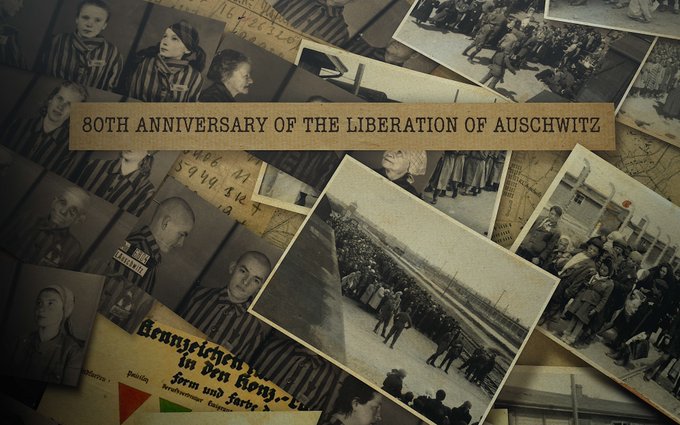
It is Yom HaShoah (Holocaust Rembrance Day) and with all the bad things going on in the world today it may be more difficult for people to find time to reflect on those evil events that seem so long ago.
I am not Jewish, and I am not old enough to know those days, but I do come from the generation whose parents and grandparents were caught up in that history. For me, my link to that past is through my grandfather, Marinus Sorensen, and my various uncles who joined military service to fight the Nazis. My uncles tales will have to await the telling. But, when thinking about the Holocaust it is my grandfather who I remember.
Marinus Sorensen had a full life as they say. But in this particular context he was for a number of years in the 1930s and early 1940s an immigration agent, operating out of Denmark, for the Canadian Pacific Railway. The railways in Canada, in return for the vast land grants that they received from the Canadian government, were tasked with recruiting immigrants to Canada to help populate the Canadian West. This took my grandfather through the Baltic region interviewing prospective immigrant families and issuing them their transit papers to Canada.
His papers (he was a bit of a diarist!) reveal the many difficult family situations he encountered, and offer his sense of forboding as he and the rest of Europe sensed the growing evil that was the Nazi Party in Germany and the threat it represented to Europe and to Jews in Europe. His papers also reveal the many struggles he had in getting approval for Jewish immigrants to Canada from a government that had an explicit anti-Jewish immigration policy. Some of his writing can be found in the well-known book “None Is Too Many: Canada and the Jews of Europe, 1933–1948” by Abella and Roper which documents Canada’s restrictive immigration policy towards Jewish refugees during the Holocaust years.
The quote that I am particularly struck by is the following. Writing to his boss in 1940, he said
“The day will come when Immigration will be under debate, and then the Ottawa Immigration Serviced shall be judged by (its) records. For us it will not be unimportant to have these records at our fingertips. They shall then find us as their bad conscience.”
M.B. Sorensen, quoted in “None is too many: Canada and the jews of Europe, 1933-1948, Abella and roper (page 285)
But my grandfather Sorensen did have some successes with his efforts to secure passage to Canada for Jewish families when he could convince Ottawa they would make a positive contribution to Canada.
I am fortunate to have found a story and a video of a Yom HaShoah ceremony in 2013 in Cornwall, Ontario which illustrates the assistance he was able to provide to one particular family when he handed out transit visas and facilitated transport to Canada.

CFN – (2013) For this year’s Yom HaShoah (Holocaust Remembrance Day) in Cornwall, Ontario, the focus will be on how an extended Jewish family – the Kaplans – escaped from the Holocaust in Lithuania to come to Williamstown, Ontario some 74 years ago. It is also the story of two heroic men who were instrumental in their escape, and of the warm welcome they received from the local people in Williamstown and Cornwall at a time when Canada was generally not accepting Jewish immigrants or refugees.
The children’s book, One More Border, describes the story of one of these families. It shows the role of the Japanese Vice-Consul in Lithuania, Chiune (Sempo) Sugihara, who helped literally thousands of Jews to escape by issuing them transit visas to Japan, against his government’s wishes. Sugihara was subsequently honoured by the Government of Israel as “Righteous Among the Nations” – one of so far more than 24,000 non-Jews recognized as having helped Jews escape from the Holocaust at great personal risk to themselves.
However, not so well known is the role played by Marinus (Mark) Sorensen, the Canadian Pacific Railway’s immigration agent in Denmark. He facilitated the emigration of several thousand farm settlers, including Jews, from Europe to Canada upto 1940 and narrowly escaped capture himself in Denmark after the Germans invaded. Among the Jews Sorensen helped were Sussman and Hinde Kaplan and their four unmarried children. These members of the Kaplan family were able to leave Lithuania just before the outbreak of World War II, and eventually ended up buying an abandoned farm in Williamstown, near Cornwall, Ontario.
As a result, the other two Kaplan children with their families, had a place to come to in Canada.
Even today, there are a few Williamstown residents who have fond memories of the extended Kaplan family, particularly the children – Nomi, Igor and Atid.
Two Kaplan family members, Ellayne Kaplan and Ilona Weinstein, from Montreal, will be sharing their family’s story. In addition, Mark Sorenson’s son, Ben (who was with his father in Denmark right up to just before the outbreak of the war), and two of the Kaplan’s children’s former schoolmates from Williamstown are coming as well.
The event will be the first time that some of the Kaplans will be meeting a son of one of the two people who were so instrumental in saving their family from the Holocaust.
The Cornwall Interfaith Partnership, which is organizing this year’s event in Cornwall, feels that the Holocaust was a monumental human tragedy that should be revisited periodically in order to make people more aware of the reality of such genocide and its causes.
Source: Cornwall Free News, Escape From The Holocaust – Cornwall Interfaith Partnership Event – April 7, 2013 St. Paul’s United Church
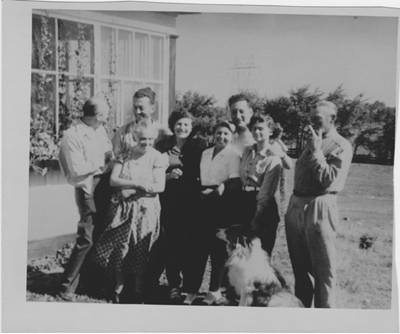
Apparently the Kaplan family made a video of the event which is available on YouTube.
This year’s (2013) Yom HaShoah commemoration in Cornwall is being hosted by Knox – St. Paul’s United Church, 800 Twelfth Street East, at 6:45 p.m. on April 7, when everyone is welcome.
Leave a Reply