

June 22, 2025 Robert Fife Ottawa Bureau Chief, Globe and Mail
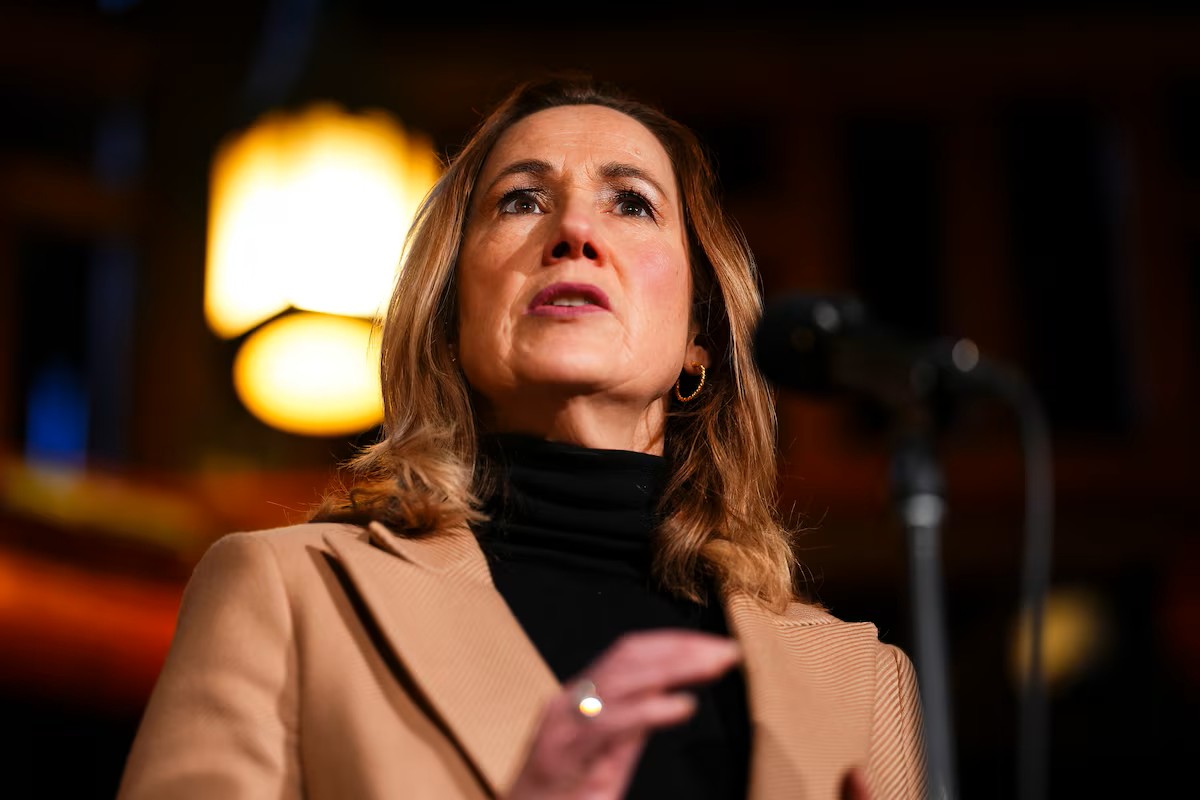
Prime Minister Mark Carney has asked Kirsten Hillman to stay on as Canada’s ambassador to Washington and take on the role of chief negotiator in tense trade and security talks with the Trump administration.
Many Liberals and observers had expected after the election that the Prime Minister would replace Ms. Hillman, who has served in the Washington embassy since 2017, including six years as ambassador.
But the Prime Minister’s Office confirmed Sunday that Mr. Carney has not only asked Ms. Hillman to remain as Washington envoy but to become Canada’s top trade interlocutor with President Donald Trump’s administration.
“The Prime Minister has named her Canada’s chief negotiator. This aligns Ambassador Hillman as the counterpart to the U.S. Trade Representative in our bilateral talks,” press secretary Emily Williams told The Globe and Mail. “This expanded role is in addition to her ongoing commitment to serve as Canada’s Ambassador to the United States.”
Three sources told The Globe that Mr. Carney is impressed with Ms. Hillman’s skills as a diplomat, strategic thinker and hard-nosed negotiator. Ms. Hillman has agreed to serve for at least another year but not for an extended period of time, the sources said.
The Globe is not identifying the sources who were not authorized to publicly discuss these matters.
Two of the sources said Canadian financier Mark Wiseman, a close friend of the Prime Minister, and former Quebec premier Jean Charest are possible replacements for Ms. Hillman when she does step aside.
Brian Clow, who handled Canada-U.S. relations as deputy chief of staff to former prime minster Justin Trudeau, said it’s rare for a public servant to become ambassador to Washington. Ms. Hillman is also the first woman to hold the job.
“Kirsten Hillman is incredibly skilled, effective and has achieved real results despite the current crisis we are in,” Mr. Clow said. “She has been our ambassador for six years so her relationship and D.C. knowledge is something that cannot be easily replaced.”
Ms. Hillman is a lawyer with deep experience in trade negotiations. She was a key member of the team that worked to revamp the North American Free Trade Agreement during Mr. Trump’s first term. It was replaced by the United States-Mexico-Canada Agreement (USMCA). She also served as Canada’s chief negotiator for the Comprehensive and Progressive Agreement for Trans-Pacific Partnership.
Ms. Hillman and Trade Minister Dominic LeBlanc have been leading the Canadian team in talks with U.S. Commerce Secretary Howard Lutnick, Trade Representative Jamieson Greer and Treasury Secretary Scott Bessent.
Canada, U.S. exchanging potential terms on economic and security deal
The talks are at a delicate stage, with a deadline of mid-July to reach an economic and security deal that would end a painful 3½-month trade war, which was sparked in March by protectionist U.S. tariffs.
The Canadians met twice last week with their U.S. counterparts and plans are for another two meetings this week.
Details of what is being discussed at the negotiation table have not been released.
Mr. LeBlanc and Ms. Hillman have said repeatedly that Ottawa’s goal is a deal that removes all levies imposed by Mr. Trump, but the U.S. President, at last week’s G7 summit, voiced his reluctance to abandon tariffs. “I’m a tariff person,” he told reporters in Kananaskis, Alta.
Canada has not yet retaliated against higher U.S. tariffs on Canadian steel and aluminum after Mr. Trump raised levies to 50 per cent in early June.
Mr. Carney told reporters last week that Canada will make a decision July 21 on whether to raise retaliatory tariffs on U.S. steel and aluminum, which are 25 per cent now, “to levels consistent with the progress that’s made at that point on the broader trading arrangements with the United States.”
However, Mr. Carney did crack down on the dumping of cheap foreign steel into the country in an attempt to limit steel imports from countries that don’t have free-trade agreements with Canada.
USMCA is coming up for a review next July and there is likely to be a U.S. push for auto-industry rules of origin, new restrictions on Chinese companies in North America, as well as U.S. demands to dismantle Canada’s supply-management system.
Source: Globe and Mail
Leave a Reply