
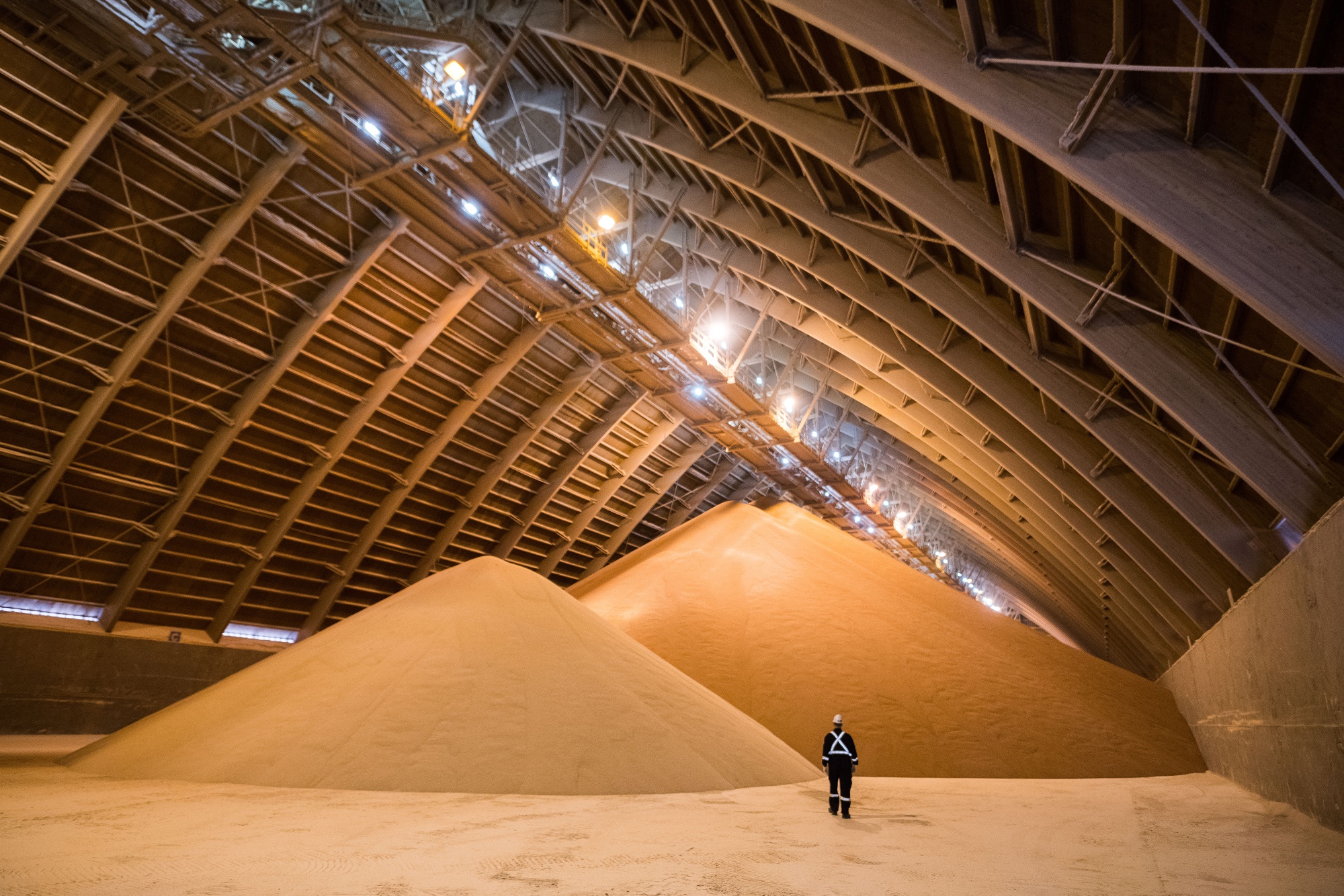
I don’t spend a lot of time thinking about fertilizer but this week fertilizer came into focus for me with three inter-related developments. Taken together they illustrate the many, and inconsistent, ways that President Trump’s “approach” to trade policy can bite you.
The first story was a predictable one. Canada is the world’s largest producer of potash and supplies 80% of U.S. needs. That surely does not sit well with Trump and his vision for American pre-eminence in everything and his regular suggestion that Canada doesn’t make anything that the U.S. needs. And faced with rising U.S. farm prices (due in large measure to the various trade measures he has imposed), Canada made an easy, and misplaced, target for his weapon of choice…tariffs. In the course of his farm bailout the President launched a Justice Department study of price fixing by fertilizer companies aroudn the world, and threatened to impose “very high” tariffs on Canadian potash.
The U.S. agriculture sector knows this would be unwise…
While fertilizer markets fluctuate regularly, it’s not every week that the word “tariff” sends tremors through the potash trade. But that’s what happened this week, as threats of U.S. tariffs on Canadian potash raised eyebrows and heart rates across much of the U.S. agriculture industry.
Josh Linville, vice president of fertilizer at StoneX, says that, unlike some other tariffs where the seller bears the brunt of the cost, potash exports are different. Canada supplies nearly 90 per cent of the potash imported into the U.S., and there are few viable alternatives, he says.
“The problem is if we start to upset [Canada] where else around the world do you start to go? To our second biggest supplier? That’s Russia,” Linville says, adding that Russian potash only accounts for eight to 10 per cent of the total U.S. demand.
Although the tariff is only a threat for now, Linville notes the strategic messaging behind it: “I think this is just trying to get some attention and say, listen, we need to talk. I’m not going to get you to the table quickly if I don’t threaten you with something. So this is what I’m going to go with this round”.
Still, if enacted, the tariff wouldn’t punish Canadian exporters—it would raise costs for American farmers. That’s because Canada holds the cards in this supply relationship, and domestic U.S. production can’t fill the gap. With spring demand looming and logistics likely to tighten in Q1, this isn’t a threat to take lightly.
Source: Real Agriculture, December 11, 2025
The second story is one that has been brewing along for some time. Saskatchewan-based Nutrien, the worlds largest producer of potash, recently announced that it was planning to build a new export terminal for its Canadian-mined potash in Longview, Washington.
Nutrien selects U.S. port to build new potash export terminal | CBC News
While there are a multitude of reasons that would have gone into that decision, lurking in the background is Trump’s regular suggestions that companies that choose to relocate to the U.S. and invest there will be rewarded. Surely this would not have escaped the Nutrien Board of Directors.
The Canadian government, which has pegged its future on building a stronger, more self-reliant economy, this has come as a bit of a blow and efforts are underway to get the company to reconsider.
And finally there was the news that the U.S. has negotiated with Belarus to secure the release of a group of political prisoners. Among the payoffs for Belarus is a U.S. commitment to eliminate sanctions on its potash production.
I suppose we should all welcome the release of political prisoners whenever it happens. And there is more than a bit of foreign policy consideration in the move… analysts have suggested the continuing effort to peel Belorus away from Russia’s dominance as well as Belarus being a potential asylum destination for Venezuela’s Maduro…but the circumstances here are quite rich.
On the one hand the Trump administration threatens Canadian potash with tariffs and legal inquiries. On the other it does a deal to facilitate greater access to the U.S. market for Belarus potash to displace Canadian supply.
Inconsistent…yes in some ways. But entirely consistent with the “America First”, “shoot yourself in the foot”, “who cares if you are a traditional ally” approach of the Trump Administration to trade policy.
Leave a Reply