
Nearly 40 nations are hatching a plan to save the World Trade Organization or, if it can’t be salvaged, to build a new order.
A long piece in Politico EU today that puts Canadian Prime Minister Carney at the centre of a “anti-Trump” alliance on trade.
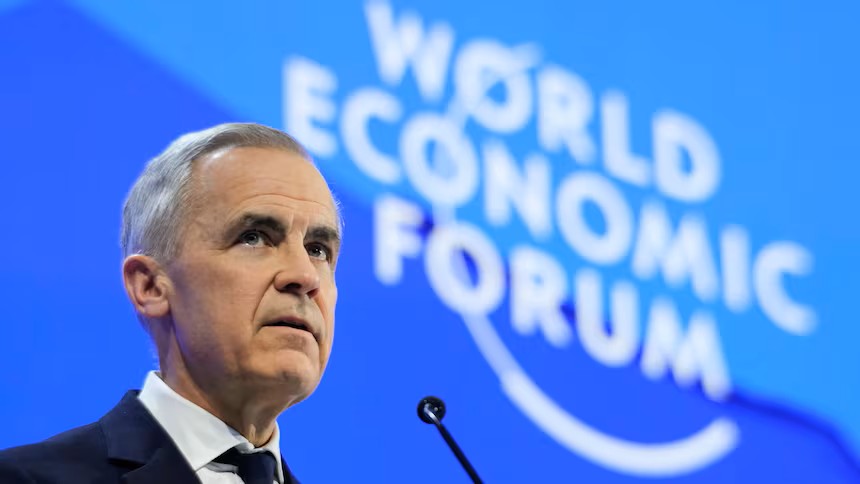
The Prime Minister has been clear since his election that he is keen to protect the international rules-based system and to diversify Canadian trade. And his Davos speech on the need for like-minded middle countries to work together well remembered.
At first glance, this is the kind of headline that any PM would like to read. But, it is by no means clear that whatever is being hatched for discussion in Cameroon will be agreed. Will that mean that the next story will be that Carney “failed”? And, with Canada’s already “lagging” engagement with the U.S. on CUSMA review coming up, being pitched as the leader of an anti-Trump movement might simply give Carney and the Canadian negotiating team one more issue to address with the other side.
Still and all, I’m keeping my fingers crossed that something does indeed come of the effort. Trump and his trade cronies need more pushback on their America First agenda.
March 25, 2026 6:00 am CET
By Graham Lanktree, Camille Gijs, Zi-Ann Lum and Caroline HugLONDON — The middle powers that Canada’s Mark Carney rallied in Davos will face a test this week against the “rupture” in global trade opened by U.S. President Donald Trump.
The nearly 40 nations in the EU and Indo-Pacific CPTPP trade blocs are on a quest to save the World Trade Organization at a pivotal meeting in the African nation of Cameroon.
Six years ago, Trump crippled the global trade body’s dispute court. His administration is now pressuring members to change the WTO’s core principles to get tough on China as the White House’s tariffs openly flout the rules, damaging global trade.
Among other squabbles, the WTO, which operates by consensus, has seen its 166 members at odds over whether to make e-commerce and digital trade — including software, cloud services, and music and movie streaming — permanently tariff-free.
On the sidelines of the four-day showdown in Cameroon’s capital, Yaoundé, the EU and the 12-nation CPTPP bloc, which together represent nearly a third of the global economy, will hatch a plan Friday to keep the WTO on the rails.
Or, if it can’t be salvaged, “build a new order” as Carney urged in his address to the World Economic Forum.
“I think Canada has added a bit of oomph into this conversation since Mark Carney’s speech,” U.K. Trade Minister Chris Bryant told POLITICO ahead of the WTO’s 14th Ministerial Conference (MC14), where he is serving as a facilitator, guiding the multilateral reform talks.
Last month, Carney offered to “broker a bridge” between the EU and the fast-growing Indo-Pacific bloc — which comprises Canada, Japan, Australia, New Zealand, Peru, Chile, Mexico, Brunei, Singapore, Vietnam, Malaysia and, most recently, the U.K. — in the form of a new anti-Trump trade pact that also aims to reform the WTO.
It’s possible the WTO “could become the organization that it really, really wants to be, which is able to make decisions and take things forward,” Bryant said.
A bellwether is the future of the so-called e-commerce moratorium, after the 2024 Dubai ministerial kicked the final decision about barring nations from slapping tariffs on digital trade into this year.
“We prefer to make it permanent,” Bryant said, pointing to a joint statement by the EU and Comprehensive and Progressive Agreement for Trans-Pacific Partnership (CPTPP) nations.
By our powers combined (Plan A)
Trade ministers from the EU and CPTPP nations are readying a new joint statement on WTO reform to deploy at MC14 this week, according to two diplomats — one from a CPTPP member and the other from the EU.It will “almost certainly” contain something on e-commerce, said the CPTPP nation diplomat, noting it’s not yet finalized and discussions about its contents are ongoing.
The aim is to coordinate “a plurilateral statement on WTO reform if we don’t manage to get an ambitious one in the multilateral sphere,” said the EU diplomat. That means that if the WTO’s members can’t come to a consensus, the EU and CPTPP will forge ahead on rules-based trade together alongside a coalition of the willing.
“Ironically, it may be Donald Trump — the man who lit the fire to the old rules-based order — who inadvertently acts as a catalyst for a renewed, rules-based global trading order,” said John Ferguson, global lead of the Future of Trade initiative at Economist Impact. “While the U.S. retreats behind its own rules, the rest of the world is not standing still — it is actively rebuilding the global trading system in America’s absence.
“The global trading system as we knew it may be fracturing, but from that fracture, something more resilient could emerge,” added Ferguson. “An EU–CPTPP agreement could become its foundation stone.”
With European Commission President Ursula von der Leyen just having shaken hands on a breakthrough trade deal with CPTPP member Australia, Brussels is in the mood to deepen the partnership.
“Collaboration with CPTPP countries … it’s important for us. We share the view that we need to anchor our economic relations in a rules-based system,” Denis Redonnet, deputy director general of the Commission’s trade department, told POLITICO at a Chatham House event in London last week.
If the Trump administration maintains its blockade of the WTO’s Appellate Body, Redonnet explained, both the EU and all but one CPTPP member have joined a voluntary trade arbitration group, known as the MPIA.
“There is clearly growing recognition that if consensus-based reform at the WTO remains blocked, willing countries will need parallel mechanisms to move ahead on specific issues,” said Vina Nadjibulla, a vice-president at the Asia Pacific Foundation of Canada think tank.
The EU and CPTPP are working to “build coalitions around areas where there is already substantial convergence,” said Nadjibulla. “This is not about replacing the WTO, but about creating a complementary platform for a large group of like-minded economies to move forward on digital trade, investment facilitation, and supply chains.”
The partnership points to a bigger strategic story, she added, “the emergence of a wider middle-power trade coalition designed to preserve as much of the rules-based order as possible, while also creating new pathways to update it.”
If that doesn’t work… (Plan B)
In the wake of Trump’s “Liberation Day” tariffs early last year, Brussels and the CPTPP bloc scrambled to come together with a plan to insulate themselves from the White House’s erratic trade policy.At a key meeting in Melbourne, Australia, last November, EU Trade Commissioner Maroš Šefčovič signed on to draw closer together in five key areas, including WTO reform and a pact on so-called rules of origin, which would allow manufacturers throughout the two blocs to trade goods and their parts more seamlessly.
These issues and strengthening digital trade rules and supply chains are also on the agenda at this Friday’s meeting between the EU’s Šefčovič and CPTPP ministers.
In February, Prime Minister Carney dispatched John Hannaford, his personal representative to the European Union, to Singapore to push forward the potential deals with regional leaders.
Securing trade pacts between the EU and CPTPP “would be a direct rebuke to the Trump administration, and proof that a critical mass of the world’s leading economies can come together to create genuine stability in global markets,” said Economist Impact’s Ferguson.
A senior Canadian government official said the discussions in Cameroon would be focused on finding areas where rapid progress is possible, and then to have a work program going forward. Canada is eager for negotiators to make as much progress as quickly as possible, said the official, who like others cited above was granted anonymity because the talks are private.
It’s a sentiment shared in London.
“We hope the more we meet, the more we can transact business and keep things moving,” said British Trade Minister Bryant, adding the two blocs can’t just meet once a year to achieve their goals.
Graham Lanktree and Caroline Hug reported from London, Camille Gijs from Brussels and Zi-Ann Lum from Toronto. Carlo Martuscelli contributed reporting from Brussels.
Leave a Reply