
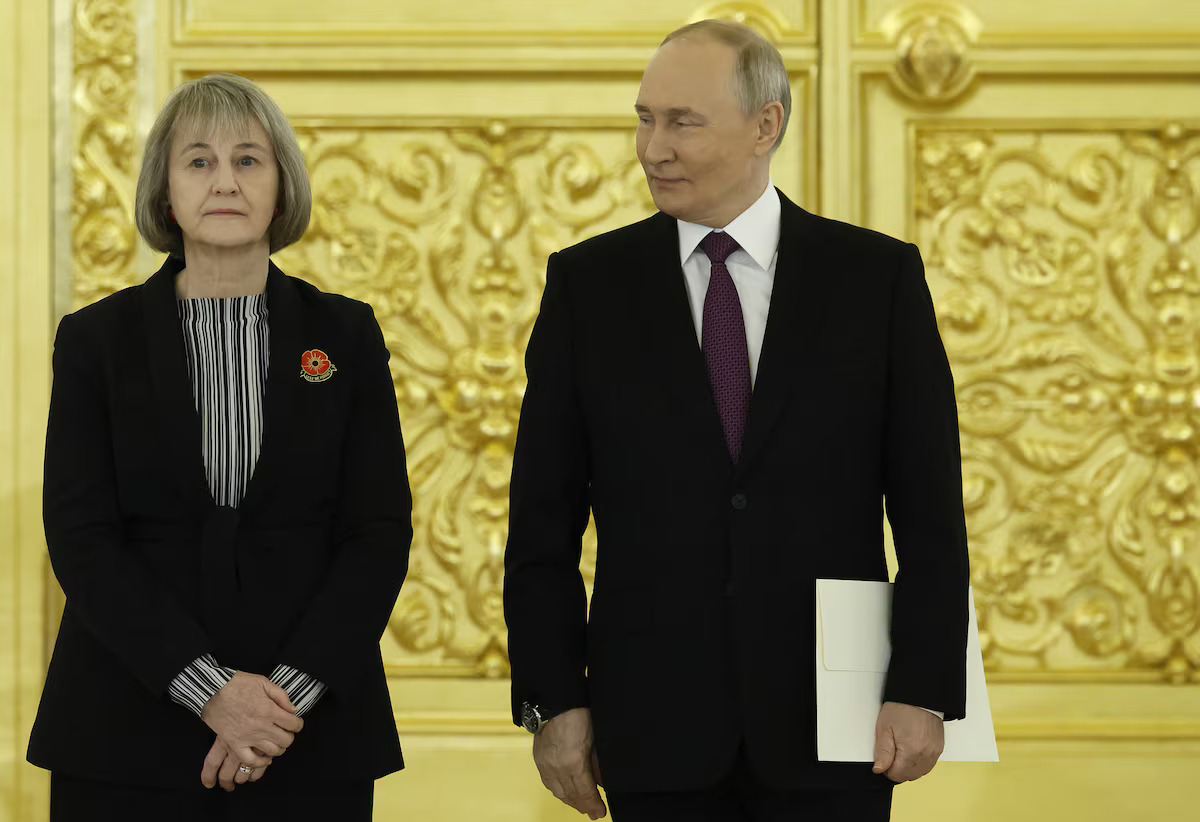

Unlike many of my former colleagues, I was not a career Canadian foreign service officer. I was a trade negotiator for Canada which meant that while I travelled the world to engage in a variety of economic negotiations, with a wide variety of countries in a range of circumstances, I did not have a career filled with a series of postings. I had one posting at the end of my career…as High Commissioner to Jamaica and The Bahamas.
I have always reflected that compared to many of my colleagues, I was very fortunate to be posted to a country with whom Canada enjoys positive relations. I had all the access I needed to the Jamaican government in order to do my work. All of my bilateral engagments were civilized. And my wife and I were free to travel the country and to meet with people.
Compare this with the experience of Canadian Ambassador Sarah Taylor recounts in this story from the Globe and Mail from December 30, 2024.
I was indeed fortunate.
Mark MacKinnon Senior International Correspondent
Globe and Mail, December 30, 2024
To be Canada’s ambassador to Russia these days is to be both officially ignored and constantly watched.
The Russian Foreign Ministry holds regular briefings for foreign diplomats but doesn’t invite those from the countries it considers “unfriendly” – a list of more than two dozen, mostly Western, nations that Canada has been on since soon after the start of Russia’s invasion of Ukraine. Diplomats from countries on the “unfriendly” list are also skipped for Christmas and New Year’s party invitations.
Meanwhile, Sarah Taylor – Canada’s 17th ambassador to Moscow – and her staff experience regular surveillance, as well as staged demonstrations berating Canada for its assistance to Ukraine since Russia invaded its smaller neighbour in February, 2022.
“I would say there is a somewhat hostile atmosphere. That’s not new, although it has intensified since the invasion of Ukraine,” Ms. Taylor said in a video interview from Moscow. “The feel, for a Canadian or Western diplomat, is quite Cold War-like, with one exception – that there are a lot of Eastern European countries that are now part of NATO and not part of the Warsaw Pact.”
While Ms. Taylor wouldn’t get into the details of the “quite aggressive” surveillance she and her staff have been subjected to, she said the occasional demonstrations were clearly ordered by the Kremlin as a way of showing its displeasure with Canada’s military and economic support for Ukraine.
“You have a demonstration where all the demonstrators turn up at five, wave flags and shout slogans – and then at six they clock off,” Ms. Taylor said. “The Russian government doesn’t seem to care that these demonstrations are obviously manufactured. That’s part of the point – that this is a message from the government.”
One such demonstration earlier this year saw a crowd of perhaps two dozen people stand outside Ms. Taylor’s official residence. In a video broadcast on Russian state television, the crowd waved orange-and-black flags, symbolizing support for the invasion of Ukraine, while chanting about Canada’s alleged support for “fascism.” (One of Russian President Vladimir Putin’s stated reasons for ordering the invasion of Ukraine was to rid the country’s leadership of supposed neo-Nazis, despite the fact Ukrainian President Volodymyr Zelensky is both democratically elected and Jewish.)
On an October trip to the Far Eastern city of Vladivostok, Ms. Taylor was received with headlines in local media saying she was “known for her scandalous antics,” including her support for Western sanctions targeting Russia and her refusal to attend the re-inauguration of Mr. Putin. The 72-year-old Kremlin boss officially began his fifth presidential term in May, after elections that allowed little in the way of political competition.
The relationship between Canada and Russia has slid a long way from the days when Canadians were viewed with a special fondness rooted in the 1972 Summit Series, which saw a shared love of hockey overcome the Cold War divide between the Soviet Union and the West.
These days, the list of Russians willing to brave the possible consequences that come with meeting the ambassador of an “unfriendly” state is short. Ms. Taylor says some academics and analysts are still willing to discuss the Kremlin and its policies on an informal basis – as well as “a small and very brave group of civil society members” who continue their work despite an atmosphere where people have been jailed for years for expressing any kind of opposition to the war.
The Kremlin, meanwhile, almost completely ignores the Canadian embassy, other than on low-level issues such as consular cases.
“A lot of things we would normally be doing, from a work perspective, are not possible,” Ms. Taylor explained, adding that Canada, because of its own policy of “limited engagement,” was not actively seeking meetings with Mr. Putin or Foreign Minister Sergey Lavrov. “Our contacts are limited. Sometimes when we do ask for a meeting or a contact, we will be turned down.”
That’s forced Ms. Taylor and her team to try to glean information from diplomats representing countries the Russian Foreign Ministry does meet and deal with cordially, such as other members of the BRICS grouping (which initially included Brazil, Russia, India, China and South Africa but recently expanded to include Egypt, Ethiopia, Iran and the United Arab Emirates).
“We have a lot of interesting conversations with our fellow diplomats,” Ms. Taylor said, adding that not all members of BRICS want to be seen as pro-Moscow and anti-Western, allowing for some co-operation.
It all has a familiar echo for Ms. Taylor, who spent part of her childhood in what was then the capital of the Soviet Union, attending the famed Anglo-American School of Moscow while her father James (Si) Taylor was stationed at the Canadian embassy as political counsellor between 1967 and 1970.
Ms. Taylor, now 64, has fond memories of skating in Gorky Park and attending Christmas parties at the U.S. embassy as well as less fond ones of being shouted at for perceived misbehaviour by the babushkas who ruled the city’s playgrounds.
She said she often talks to her father about the similarities and differences between the Moscow they both knew during the Cold War and the Russian capital she’s stationed in now.
One key change is that while Western diplomats stationed in Moscow in the 1960s and 70s were often the target of physical violence – or operations aimed at getting them to betray their countries by sharing classified information – these days, most of the surveillance and information theft takes place online.
Despite being frozen out by official Moscow, Ms. Taylor argues that it’s still important for Canada to maintain a diplomatic presence in Russia. “There is a purpose to being here on the ground because there are contacts you can have and things you can get a feel for just from travelling around the country,” she said.
Being in Moscow allowed Ms. Taylor and other Western diplomats to join the thousands of Russians who came into the streets on March 1 to mourn opposition leader Alexey Navalny, who died in an Arctic prison camp in what Mr. Navalny’s allies see as the Kremlin-ordered murder of Mr. Putin’s most prominent critic.
Standing outside the church, Ms. Taylor noticed that the crowd became braver as it grew in numbers. Soon, anti-war and anti-Putin chants were echoing through the streets of Moscow.
That convinced Ms. Taylor that there was very little genuine affection for Mr. Putin or enthusiasm for his war in Ukraine. While Russia has seen little in the way of public dissent since Mr. Navalny’s funeral, Ms. Taylor believes things could change in a hurry.
“Everything seems quiet now, but in the right circumstances and with the right leader, you could see Russians coalesce quite suddenly,” she said. “Like with Syria, like with all these authoritarian regimes, everything is fine until it isn’t.”
Leave a Reply